
cTen years after his death, the absence of David Bowie feels deeper than the loss of a legendary musician. Cultural history is full of great artists who died young or too soon, yet few absences continue to feel as intellectually and creatively relevant a decade later. Bowie is missed not only because of the music he made, but because of the way he helped us understand the world that was coming. In a time defined by permanent transformation, platform-driven culture, and unstable creative economies, Bowie feels less like a figure from the past and more like a voice we would urgently need today.
What makes this absence so tangible is that we are now living inside the future he once described. The erosion of traditional power structures in music, the collapse of old distribution models, the rise of direct relationships between creators and audiences, and the redefinition of value around experience rather than ownership are no longer speculative ideas. They are the everyday reality of the music industry. Bowie did not merely witness these shifts; he articulated them with clarity years before they became obvious, and he adapted his own practice accordingly.
This is not why Bowie is remembered — it is why he is still studied.
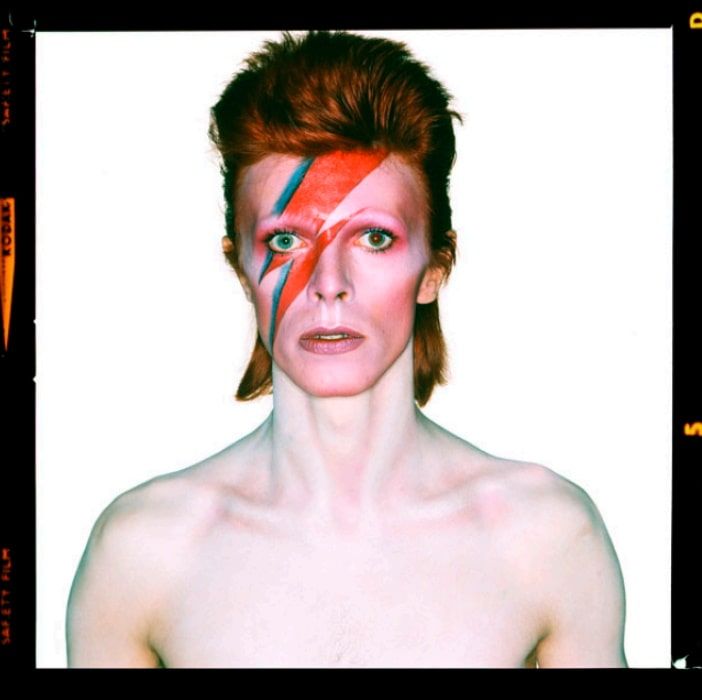
Why this article exists
In my innovation classes at ESMUC, within the Master’s prog
ram in Music Management and Production, Bowie is often the starting point for discussing the contemporary music ecosystem. Not as an icon, but as a case study. When students ask what innovation really looks like in music — beyond buzzwords and technologies — Bowie offers one of the most coherent answers: innovation begins with perception, with the ability to detect weak signals and understand how culture shifts before business models do.
What Bowie sensed intuitively in the late 1990s and early 2000s has since become the operating system of the industry. Streaming platforms, touring-based economies, participatory culture, and the collapse of distance between artist and audience are no longer emerging trends. They are the landscape in which today’s professionals must operate. Bowie did not predict these changes because he had privileged access to information, but because he understood how technology, identity, and creativity interact over time.
This article, therefore, is not an exercise in nostalgia. It is an attempt to understand relevance — and to reflect on why, ten years after his death, Bowie continues to offer one of the clearest frameworks for thinking about creativity, innovation, and the future of music.
The end of ownership and the rise of access
As early as 2002, Bowie publicly questioned the sustainability of the traditional music industry. In an interview with The New York Times, he suggested that record labels and distribution systems, as they had been known for decades, were approaching obsolescence. Music, he argued, would soon function more like a utility than a product, freely accessible rather than owned. Within ten years, he predicted, the entire structure of music consumption would be transformed — and nothing would be able to stop it.
At the time, this perspective ran counter to an industry still invested in physical sales and legal battles against file-sharing. Spotify would not launch until 2008, and the idea of streaming as the dominant mode of consumption seemed distant. Yet Bowie’s insight was not about a specific platform. It was about a cultural shift: the disappearance of scarcity and the redefinition of value. Once music could be accessed anywhere, at any time, the object itself would lose its centrality, forcing artists and industries alike to rethink their role.
Bowie did not resist this change. He accepted it as inevitable and began reorganizing his thinking around it, understanding that creativity would need to find new spaces in which to generate meaning and sustainability.
Touring as the last unique space
If recorded music was becoming infinitely reproducible, Bowie understood that live performance would gain unprecedented importance. In the same 2002 interview, he argued that artists would increasingly depend on touring, not as an optional complement, but as the core of their economic and creative activity. The live experience, he noted, would remain one of the few truly unique situations left.
Today, this observation has become structural truth. Touring generates significantly more revenue than recorded music for most artists, and live performances have evolved into complex cultural events that extend beyond the music itself. What is striking is not merely the accuracy of Bowie’s prediction, but his attitude toward it. He framed change not as loss, but as opportunity — a shift toward presence, immediacy, and connection.
Bowie understood that in a dematerialized cultural economy, physical presence would become the ultimate form of value.
Video games and emotional architecture
Bowie’s vision of the future extended beyond traditional artistic hierarchies. In 1999, when video games were still widely dismissed as secondary cultural products, he became one of the first major artists to engage deeply with the medium. His work on Omikron: The Nomad Soul was not a branding exercise, but a serious exploration of how music could function within interactive worlds.
Rejecting the functional, industrial soundscapes common in games at the time, Bowie emphasized emotional subtext. He treated the game as a living environment, one in which music could shape narrative, mood, and psychological depth. This approach anticipated the evolution of video games into one of the most sophisticated storytelling platforms of contemporary culture.
Once again, Bowie was not following a trend. He was expanding the definition of where music could exist, understanding that culture was becoming immersive, participatory, and multidimensional.
The internet as a cultural earthquake
Perhaps Bowie’s most prescient insights concerned the internet itself. In a 1999 interview with the BBC, he described its impact on society as “unimaginable,” framing it not as a tool, but as a communal force capable of reshaping power structures. He spoke openly about the demystification of the artist and the erosion of distance between creator and audience — a remarkable observation from someone who had spent decades carefully constructing myth and persona.
Rather than resisting this shift, Bowie embraced it. With the launch of BowieNet in 1998, he pioneered one of the earliest music-centered social platforms, offering fans personal web space, integrated media tools, and direct access to his creative universe. Years before MySpace, Facebook, or Instagram, Bowie was already experimenting with what it meant to build community rather than audience.
He understood that the future of culture would be dialogical, not hierarchical.
Designing one’s own ending
Bowie’s final work, Blackstar, was not simply an album released shortly before his death. It was a deliberate act of authorship, a conscious confrontation with mortality that transformed death into narrative. Bowie did not disappear; he completed a final creative gesture, integrating his own absence into the work itself.
This is perhaps why his absence feels so present today. In an era obsessed with visibility, speed, and perpetual reinvention, Bowie represented something increasingly rare: a creative intelligence capable of long-term vision, emotional depth, and intellectual coherence. He showed that innovation does not require abandoning humanity, and that anticipating the future is ultimately an act of empathy.
Ten years on, we miss David Bowie not because he belongs to the past, but because he continues to help us understand the present. And in a world still struggling to make sense of its own transformations, that may be his most enduring legacy.
Manel González-PIñero